
for products & other solutions
- AKIMIX polymer-bound dispersions
- AKISAN product line
- NASIKA DB product Line
- NASIKA L.E. polymer-bound dispersions
- NASIKA polymer-bound dispersions
Absolutely. Nasika designs all its product families — AKISAN, DB, and LE — to be fully compatible:
-
AKISAN: accelerators and curing auxiliaries.
-
Nasika DB: co-agents, plasticizers, and functional additives.
-
Nasika LE: internal and external lubricants.
Used together, they provide a synergistic, optimized solution for rubber compounding.
Several AKISAN grades are nitrosamine-free and do not contain nitrosamine precursors, making them ideal for automotive, healthcare, and sensitive applications that demand safer, low-emission materials.
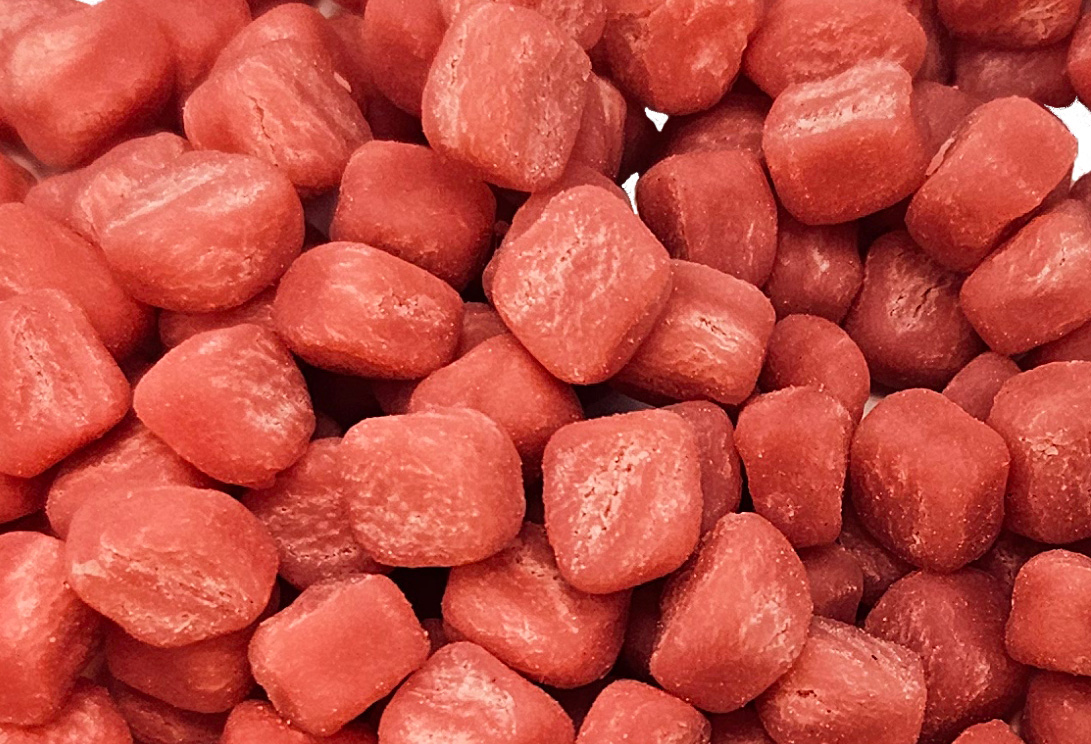
These formats minimize dust formation, improve additive dispersion in rubber, and enhance safety and hygiene during processing. They also facilitate automated dosing and more consistent compound preparation.
AKISAN is suitable for a wide range of technical, industrial, and automotive rubber applications, especially where precise curing control, reliable additive dispersion, and balanced mechanical properties are required.
1) High dispersion quality and optimized viscosity.
2) Wide functional diversity within the same product family.
3) Customizable concentrations and formats for better process control.
4) Full technical support and compatibility with other Avanzare/Nasika additives.
The number indicates the active content percentage of the main chemical in the formulation. For instance, Nasika DB TAIC 70 contains 70% active ingredient.
Powder grades are typically easier to handle in dry mixing, while liquid grades ensure faster and more uniform dispersion.
Nasika DB products are ideal for peroxide-cured rubber compounds or formulations that require better filler compatibility, moisture control, or additive dispersion.
Liquid polybutadiene is especially useful as an active plasticizer for SBR, natural rubber, and related elastomers.
The Nasika DB range also includes:
- Liquid polybutadiene — used as an active plasticizer or co-agent for specific rubbers.
- Coupling agents (e.g., SI-69) — to improve filler–rubber compatibility, especially in sulfur vulcanization systems.
- Anti-tack — metal stearate dispersions that prevent sticking during molding and processing.
- Desiccants — calcium oxide formulations to control humidity during storage or processing.
- Processing aids — to improve additive dispersion and mixing homogeneity.
A) Cyanurates: TAC (triallyl cyanurate) and TAIC (triallyl isocyanurate) improve mechanical strength and temperature resistance in vulcanization. These additives do not affect vulcanization times, although they do promote cross-linking.
B) Acrylates: Nasika DB ACTI (TRIM) reduces vulcanization times and increases cross-linking. However, it does not improve mechanical properties.
Nasika DB co-agents enhance the crosslink density during peroxide vulcanization, improving mechanical strength, thermal resistance, or curing speed — depending on the specific co-agent type (cyanurates or acrylates).
Nasika DB is a family of chemical formulations — “dry blends / chemical formulations” — developed for rubber compounding. They act as co-agents, liquid polybutadiene, coupling agents, anti-tack agents, desiccants and processing aids.
Yes. While the initial investment may be slightly higher, reduced maintenance costs, lower rejection rates, and the added value of sustainable products lead to a favorable return on investment.
Yes. Integrating NASIKA L.E. POLYMER BOUND helps your products stand out by combining high performance with environmental responsibility, creating a strong differentiator over conventional solutions.
- Aligns your company with circular economy and environmental policies.
- Lowers the overall environmental footprint across the value chain.
- Facilitates recycling without significant loss of properties.
It helps reduce production costs, minimize waste, improve processing efficiency, and add value by offering more sustainable products to the market.
Yes, thanks to controlled polymer matrices and filtration, every batch maintains the same rheological and performance characteristics, ensuring reproducible results.
The AKIMIX polymer-bound formulation accelerates dispersion, reducing mixing times while maintaining uniformity and quality. This translates into higher productivity and consistent final products.
The active ingredients in AKIMIX polymer-bound dispersions include rubber accelerators, anti-scorching agents, sulfur donors, metallic oxides, antioxidant and blowing agents, all carefully selected to optimize performance and reproducibility.
The active ingredients in NASIKA polymer-bound dispersions include rubber accelerators, anti-scorching agents, sulfur donors, metallic oxides and pigments. These materials are carefully selected and predispersed to ensure optimal performance, consistent quality, and easier handling in rubber compounding processes.
Thanks to its optimised formulation, NASIKA disperses quickly and evenly, reducing mixing effort and improving the efficiency of the entire production line.
Its formulation minimises exposure to toxic substances, protecting workers and the environment. In addition, some products incorporate recycled components and natural plasticisers for a more sustainable process.
Each lot maintains consistent rheological properties, ensuring uniformity in texture, fluidity and behaviour, resulting in high-quality, repeatable end products.

Ask any question(s) …


